Specialized Recovery for Tight Access Situations
Light-Duty Towing in Roanoke for cars, light trucks, and SUVs in challenging mountain locations
Narrow mountain roads and steep residential driveways throughout Roanoke, Salem, Vinton, Cave Spring, Hollins, and Troutville create recovery situations where heavy-duty equipment simply won't fit or position safely. Anderson & Sons Towing operates two rollbacks and two wreckers specifically configured for light-duty vehicle recovery—cars, light trucks, and SUVs up to 3500 dually capacity—in locations where access requires specialized equipment and mountain terrain expertise built over 11 years of Blue Ridge operations. Your sedan stuck in a steep driveway or SUV disabled on a narrow mountain curve needs different recovery techniques than a semi-truck on an interstate shoulder, and general heavy-duty operators often lack the compact equipment and positioning experience these situations demand.
Light-duty towing uses smaller, more maneuverable equipment designed for vehicles under one and a half tons, accessing locations and navigating terrain that larger heavy-duty rigs cannot safely reach. Specialized equipment selection matters when recovery happens on roads with tight turning radius requirements or driveways with grade changes that affect approach angles and loading stability.
Schedule an assessment of your vehicle's location and access constraints to determine appropriate equipment and recovery approach.
What Proper Light-Duty Service Requires
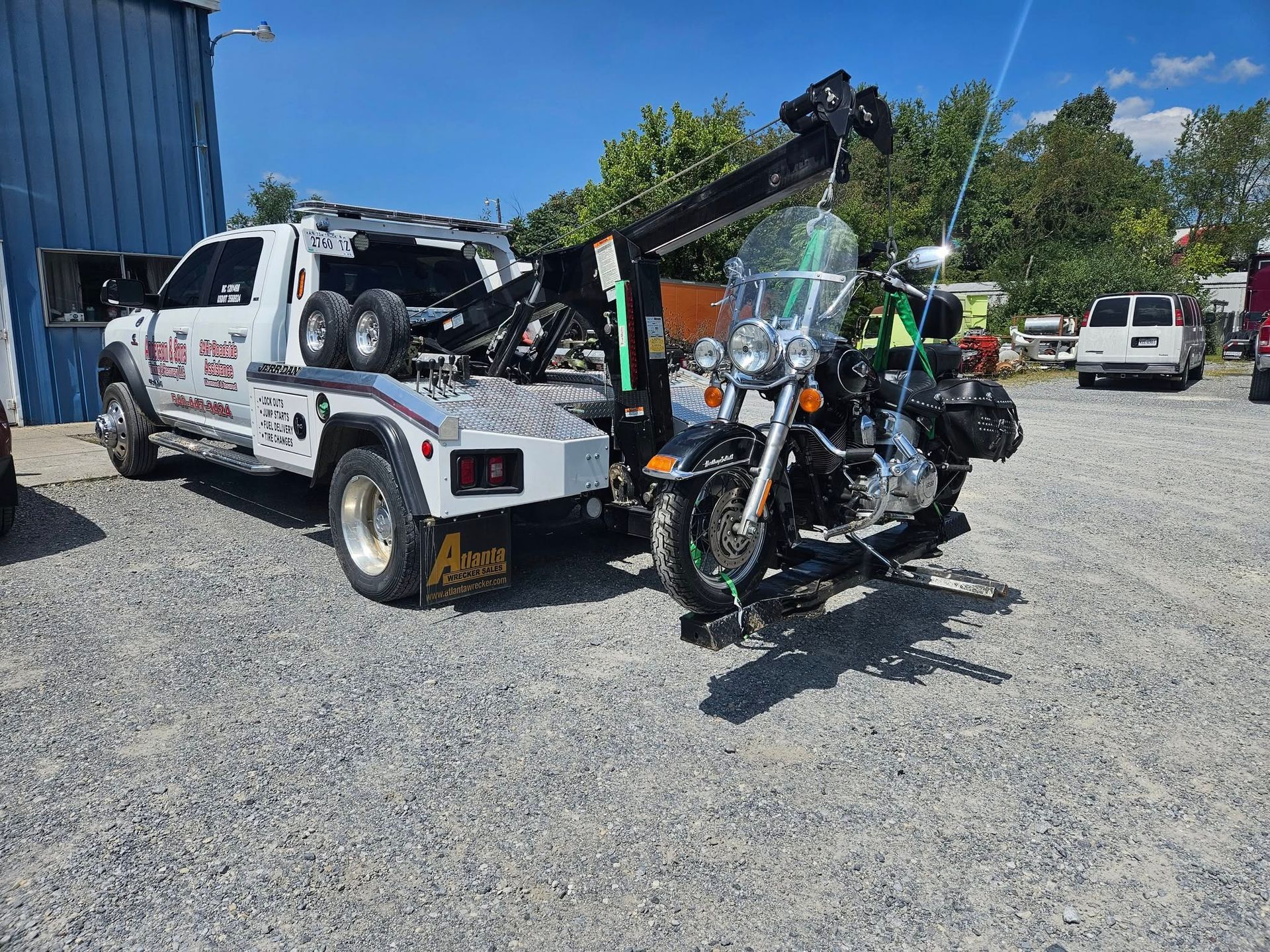
Professional light-duty recovery demands equipment sized appropriately for both the vehicle and the location, not just any available tow truck dispatched to your call. Anderson & Sons Towing maintains four dedicated light-duty units because Blue Ridge terrain presents daily situations where a 40-foot heavy-duty wrecker cannot navigate the access road, turn around safely, or position on the limited shoulder space available.
After recovery is complete, you'll notice your vehicle positioned on the flatbed or secured by the wrecker without scraping damage from forced angles or suspension stress from improper lifting points. Light-duty equipment allows operators to approach from directions that heavy rigs cannot access, use lifting points designed for smaller vehicles, and navigate residential streets where overhead clearance and turning radius become limiting factors.
Steep grade recovery requires understanding how weight shifts during loading on inclines, which tie-down points prevent movement during descent, and how to position equipment uphill or downhill depending on the specific driveway configuration. Insurance company partnerships mean direct coordination with your coverage provider while operators focus on safe recovery from challenging locations.
Questions Before Starting Your Project
Access limitations and terrain challenges raise concerns about equipment capability and recovery safety.
What vehicle types qualify as light-duty for towing purposes?
Light-duty capacity covers passenger cars, minivans, light pickup trucks, and SUVs up to 3500 dually classification, which includes most consumer vehicles but excludes larger pickup trucks, commercial vans, and any vehicle exceeding one and a half tons gross weight.
How do rollbacks differ from wreckers for light-duty recovery?
Rollbacks use a flatbed that tilts to ground level for drive-on or winch loading, ideal for vehicles with transmission damage or suspension failure, while wreckers use a boom and wheel-lift system that's more maneuverable in extremely tight spaces but requires the vehicle's wheels to bear some load during transport.
Why does mountain terrain require specialized light-duty expertise?
Blue Ridge roads and driveways present grade angles that affect loading stability, narrow shoulders that limit equipment positioning options, and tight curves where standard recovery procedures designed for level ground create safety hazards or vehicle damage risks.
What access situations are too challenging for standard towing equipment?
Heavy-duty rigs struggle with residential driveways steeper than 15 degrees, roads with overhead clearance below 13 feet, turnaround spaces less than 50 feet, and shoulders too narrow for outrigger stabilization, all of which are common in Roanoke Valley's mountain communities.
How long does light-duty recovery typically take in difficult access locations?
Recovery time depends on positioning requirements and terrain challenges, but operators with 11 years of mountain experience recognize approach limitations quickly and adjust rigging methods without multiple repositioning attempts that extend your wait time.
Anderson & Sons Towing's family-owned operation built its reputation on five-star service by matching equipment to each situation rather than forcing standard procedures into challenging locations. Call to describe your vehicle's position and access constraints so operators can coordinate the appropriate light-duty equipment and recovery approach for your specific mountain terrain situation.